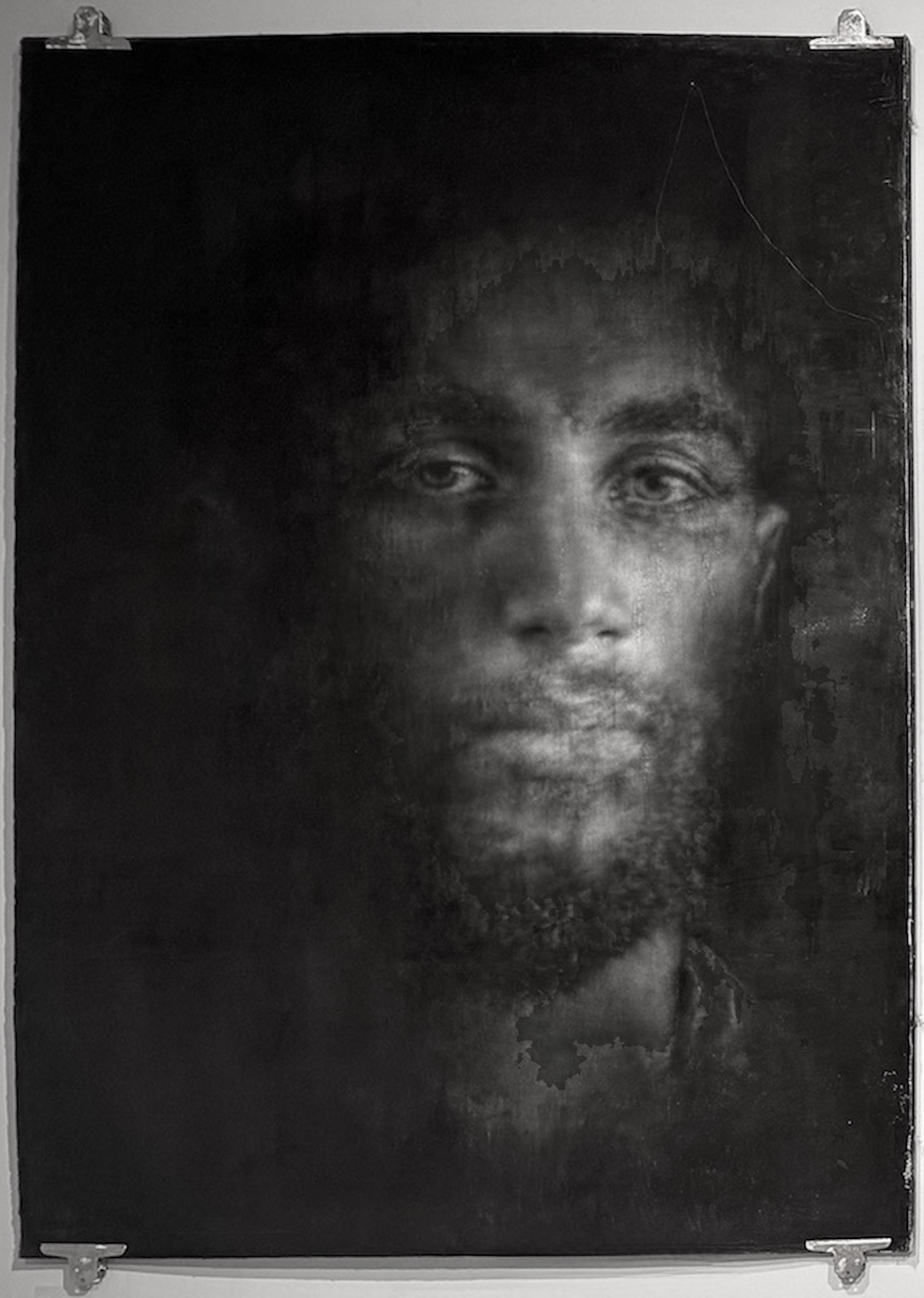
TARIK TRIPTYCH Part I
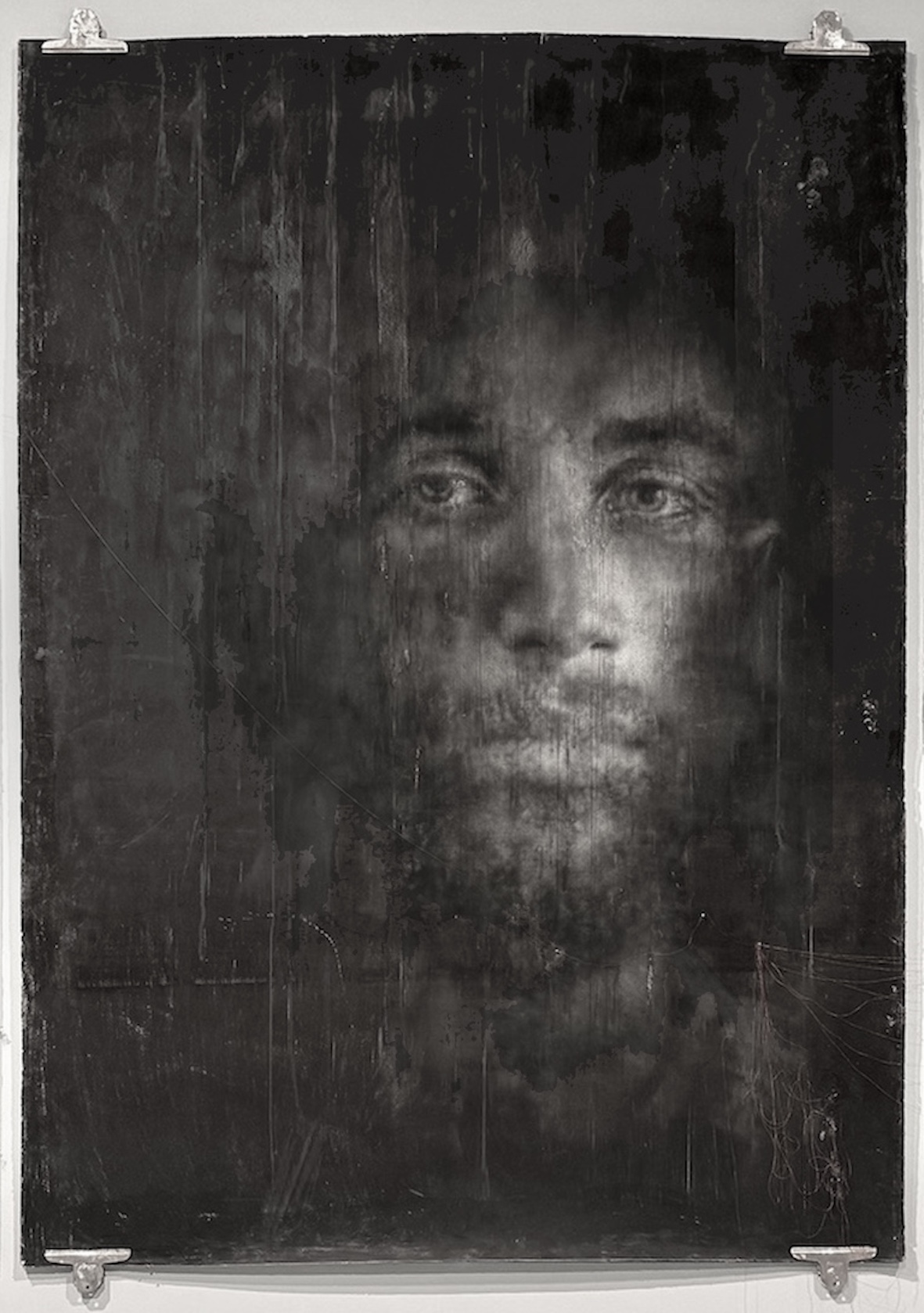
TARIK PART II
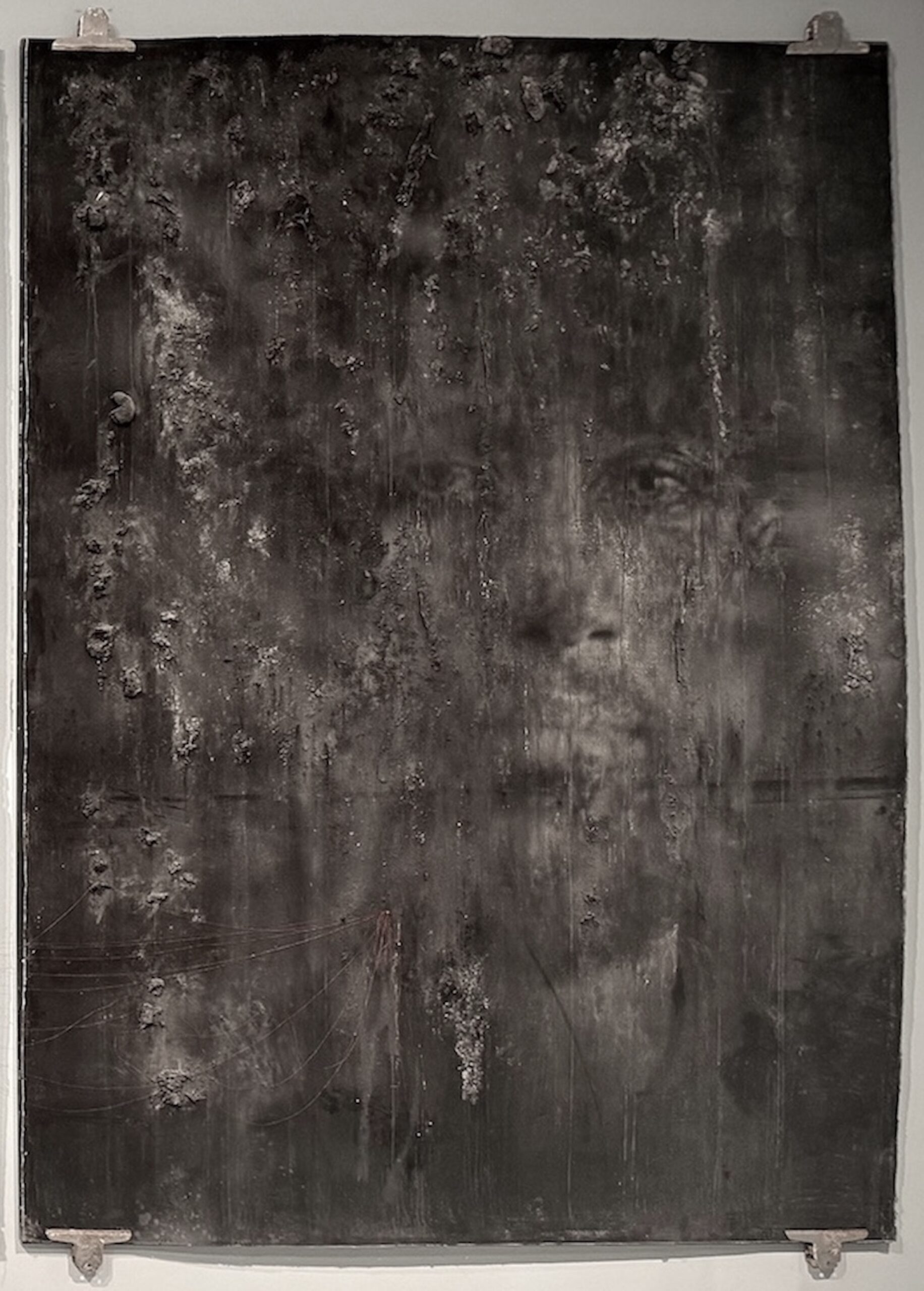
TARIK PART III
Q. How long did your portrait take to make? Is there anything about the process you’d like to share?
Each drawing takes several months and are explored through many layers in an endless ‘dance’. Drawing is for me, an ongoing process that is never fully completed. At some point, I put the charcoal down, but I am never really finished.
I rub the charcoal away through whatever means, fingers, rubbers, sandpaper, wire wool, scalpels, bleach …. I endlessly construct and deconstruct the image. The paper, a rough texture heavyweight watercolour paper needs to be strong to survive this and in some cases I go through and have to patch in.
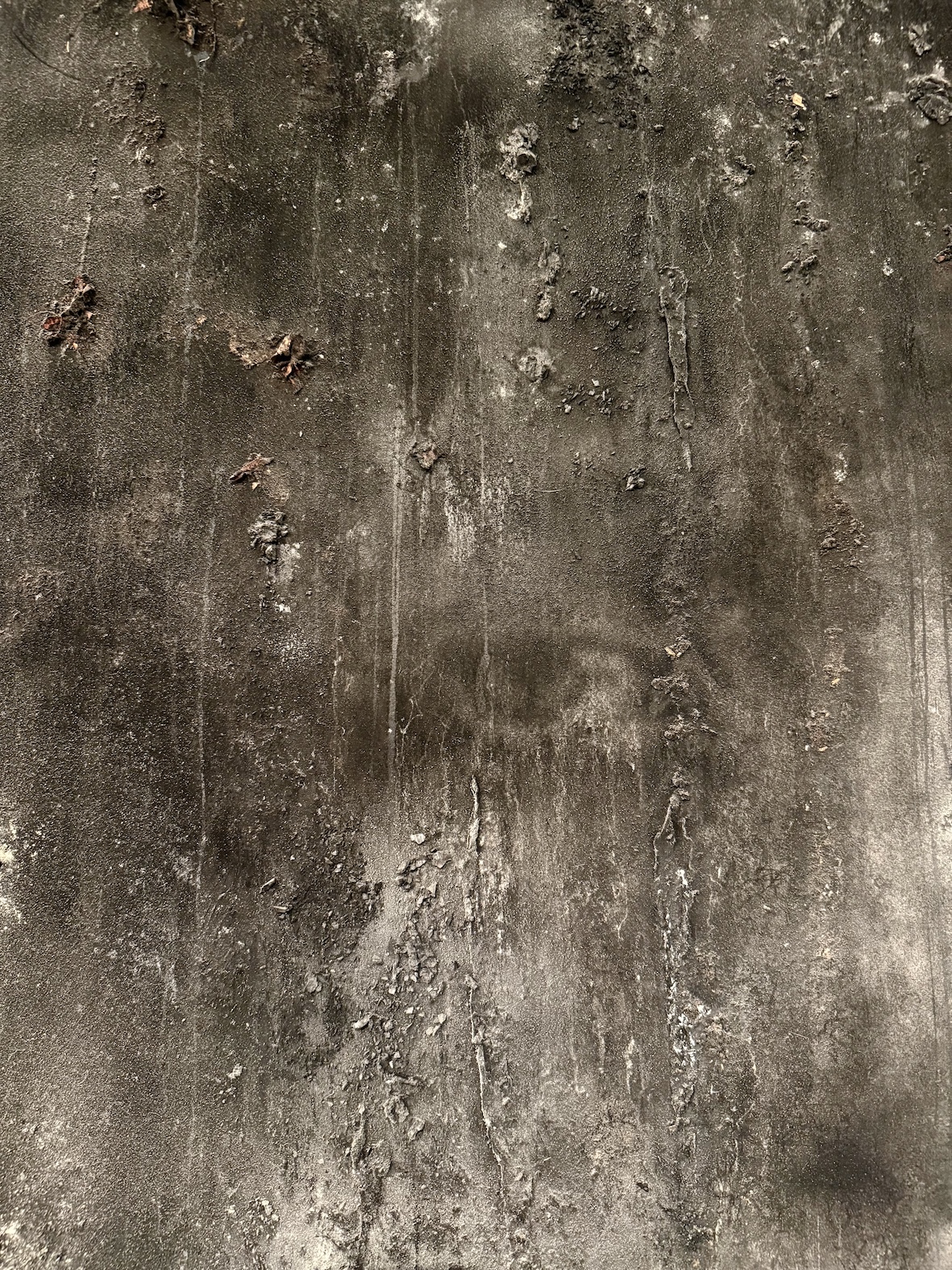
The final part of the triptych peers out through layers of burnt wood, embers and charcoal dust breaking down into fragments of a life once lived – now displaced, stateless, unseen, unheard. Tarik’s journey is plotted across each triptych with red map pins and red thread tying the 3 drawings together – a journey of hope and resilience made in a desperate attempt to reach the shores of Europe – a land of dreams…
Q. Is there anything about the sitter you’d like to share?
I met Tarik in a refugee camp in Greece. He had been a soldier in Assad’s army but when he had tried to run away, unable to bear the rape and killing of the children, he was shot in the back as a traitor by the military, hung up on the wall for 25 days and tortured with knives. He eventually escaped but was captured by Daesh (ISIS) and held for interrogation until a bomb fell on the building and he managed to escape and get to Turkey. He then tried 10 attempts to cross the Aegean Sea where more than 20,000 people have been reported dead or missing since 2014 and on the last attempt managed to reach Chios. He was held in refugee camps in Greece until he was given papers and I then travelled with him to meet with his family in Belgium after a 10 year separation.
Q. What is your background with portraiture?
My drawings are not portraits of the individual but the ‘faces’ of all the human beings, the stories and the voices behind the mugshots and biometric data collected today at the borders of the European Union. These images are, in many ways, a form of protest and also a call to arms. They are a counterforce to the new wave of right wing populists making headway in Europe.
I believe that drawings have the capacity to break down these defences in ways that other mediums do not, in large part due to the fact that the lived physicality of the artist – the elbow grease, the smudges, the erasures, the trace lines, the smell of sweat on the canvas – mediates the three-way interface between image, viewer, and artist.
Reminiscent of photographs but unlike photography, they are not immediately placed in the past, rather, they seem to unfold in the present. The subjects become actualised through the drawing process, in this, they appear to have more in common with the moving image rather than the still photograph. I work from a series of frames from my research videos, searching for the ‘essence’ of who they are in a material embodiment of the tension between intimacy and objectification.
Q. Where do you take inspiration from?
Through the act of making and transformation I try to make sense of the world I live in, of what I see, and to make art that engages others in conversation around often difficult and divisive issues.
Confronting socio-political conflicts and cultural ruptures between and within communities, my work is an attempt to foster change through the impact of the image.
I’ve been responding to the refugee crisis since 2015, gathering research material from camps across Europe to produce large-scale drawings of the faces of the people I meet. I’m multi-discplinary and also work on installations, soundscapes and videos to provoke a humanistic response to the twin issues of displacement and dispossession in our compassion-fatigued world.
Q. Do you have anything exciting coming up?
So far next year I will be exhibiting in Wonderfeel Festival, Netherlands, North York Moors Festival, Drawing Projects UK, Cambridge University, RSA Portrait Exhibition for Gaza, Palestine. I am also currently showing the work below:
SONIASHNYK (1,000 sunflowers dipped in plaster), WAC 2025 The Chapel of St Martin, Wells Cathedral
The once vibrant sunflowers, a symbol of identity and peace now lie covered in plaster, their bleaching a signifier of its scorched land, its lost lives.
Each stem a thousand dead and yet a glimpse of yellow beneath the cracks peeps through – a symbol of resistance, unity and hope, a nod to the resilience and bravery of the Ukrainian peoples.
UNGRIEVABLE LIVES at Dorchester Arts showing alongside Gil Mualem-Doron – The New Union Flag
13 little child dresses handmade from discarded lifejack, each dress represents 1 of the 13 million child refugees in the world today.
Hanging in the vast chamber – their shadows dancing gently to the piercing strings echo the souls of so many lives lost
ITERUM (Armenian genocide 1894-1896 and 1915-1916) – part of my ongoing series on genocide – Trinity Buoy Wharf Drawing Prize 2025
UNESCO – Human Rights – BARD, Italy